


Table of Contents
Responsible Gaming Guide
Playing 4D lottery should be an enjoyable form of entertainment, not a financial burden or source of stress. This guide provides essential information about responsible gaming practices, helping you maintain a healthy relationship with lottery games while protecting yourself and your loved ones.
What is Responsible Gaming?
Responsible gaming means participating in lottery games in a way that remains fun and entertaining without causing harm to yourself, your finances, or your relationships. It's about maintaining control and ensuring that gaming stays as a leisure activity rather than becoming a problem.
Core Principles of Responsible Gaming:
- Play for entertainment, not income: 4D lottery is not a financial strategy or investment opportunity. Treat it as paid entertainment like movies or dining out.
- Only use money you can afford to lose: Never gamble with money needed for essentials like rent, food, bills, or savings.
- Set limits and stick to them: Decide in advance how much time and money you'll spend, and never exceed those limits.
- Never chase losses: Losing is part of the game. Trying to win back losses by spending more almost always leads to bigger losses.
- Keep gaming in perspective: Maintain other interests, hobbies, and social activities. Gaming should be one small part of a balanced life.
- Stay informed: Understand the odds, rules, and risks involved in lottery gaming.
Responsible gaming isn't just about avoiding problems - it's about maximizing enjoyment while minimizing risks. When done responsibly, 4D lottery can be a harmless and enjoyable pastime.
Setting Personal Limits
Setting clear, realistic limits before you play is the most important step in responsible gaming. These limits should cover both money and time.
Setting Money Limits
The 5% Entertainment Rule:
Never spend more than 5% of your monthly entertainment budget on lottery games.
Example: If you allocate RM1,000 per month for entertainment (eating out, movies, hobbies), your maximum 4D budget should be RM50 per month.
How to set your money limits:
- Calculate your monthly disposable income (after all necessities and savings)
- Determine your entertainment budget
- Allocate no more than 5% to lottery gaming
- Divide monthly limit by 4 to get weekly limit
- Divide weekly limit by number of draws you plan to play
Budget Example:
Monthly entertainment budget: RM1,000
4D allocation (5%): RM50/month
Weekly budget: RM50 ÷ 4 = RM12.50
Per draw (3 draws/week): RM12.50 ÷ 3 = RM4.17
Additional money limit guidelines:
- Never borrow money to gamble
- Don't use credit cards for lottery purchases
- Set daily withdrawal limits if playing online
- Keep gambling money separate from other funds
- Track every purchase in a notebook or app
Setting Time Limits
While 4D lottery doesn't consume time the way casino gaming does, it's still important to limit the mental and emotional energy you invest.
Healthy time boundaries:
- Limit lottery outlet visits to specific days/times
- Don't spend hours analyzing numbers or patterns
- Set a timer when checking results or using prediction tools
- Avoid constantly thinking about lottery during work or family time
- Take regular breaks - skip entire weeks or months occasionally
Strategies for Sticking to Your Limits
- Physical cash only: Withdraw your weekly limit in cash. When it's gone, you're done until next week.
- Leave cards at home: Don't bring ATM or credit cards when buying tickets.
- Tell someone: Share your limits with a trusted friend or family member who can help you stay accountable.
- Use alerts: Set phone reminders or calendar alerts for your budget limits.
- Track everything: Keep a log of all purchases. Seeing the cumulative amount helps maintain perspective.
- Automated limits: If playing online, use operator-provided spending limit tools if available.
Understanding the Risks
Being informed about the true nature of lottery gaming helps you maintain realistic expectations and make better decisions.
The Mathematical Reality
4D lottery has a built-in house edge, meaning operators pay out less than they collect. This ensures long-term profitability for operators and long-term losses for players as a group.
Key Statistical Facts:
- Chance of winning any Big Bet prize: 0.23% (23 in 10,000)
- Chance of winning 1st, 2nd, or 3rd prize: 0.03% (3 in 10,000)
- Expected return: Typically 50-60% of money wagered
- This means for every RM100 spent long-term, expect to get back RM50-60
What this means for you:
- You will lose money over time - this is mathematically certain
- Individual wins don't change the long-term odds
- No strategy can overcome the house edge
- Treat all money spent on lottery as entertainment cost, not investment
Common Misconceptions and Myths
Understanding and avoiding these false beliefs helps prevent problem gambling:
Myth: "I'm due for a win"
Reality: Each draw is independent. Past losses don't make wins more likely. This is called the Gambler's Fallacy.
Myth: "I can win back my losses"
Reality: Chasing losses usually leads to bigger losses. The odds don't change based on your previous results.
Myth: "I have a system that works"
Reality: No system can change the fundamental mathematics. Pattern analysis, hot/cold numbers, and other strategies don't improve odds.
Myth: "I almost won"
Reality: There's no such thing as "almost winning" in lottery. A ticket is either a winner or not - there's no credit for being close.
Myth: "Big win is around the corner"
Reality: Every draw has the same odds. Frequency of play doesn't make wins more likely in the short term.
Financial and Personal Risks
Beyond losing money, excessive gambling can cause:
- Debt accumulation
- Inability to pay bills or meet financial obligations
- Damaged credit scores
- Relationship problems with family and friends
- Work performance issues
- Mental health problems (anxiety, depression, stress)
- Legal problems if borrowing or stealing to gamble
- Loss of trust from loved ones
Warning Signs of Problem Gambling
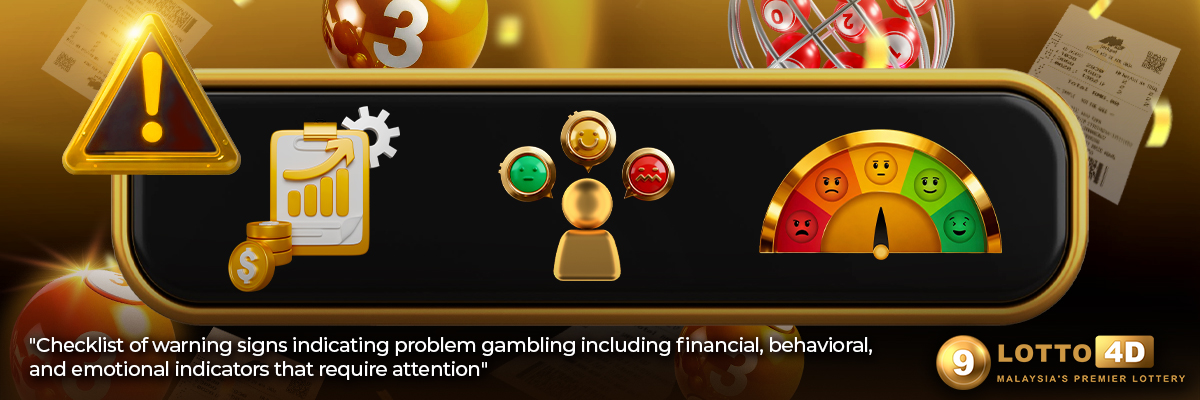
Problem gambling often develops gradually. Recognizing warning signs early makes it easier to regain control.
Warning Signs - If you answer "yes" to several of these, seek help:
Financial Warning Signs:
- Spending more than you can afford on lottery
- Borrowing money to gamble
- Lying about how much you spend
- Missing bill payments due to gambling expenses
- Selling possessions to fund gambling
- Using credit cards or loans for gambling
Behavioral Warning Signs:
- Unable to stick to spending limits
- Chasing losses by spending more
- Gambling more frequently or with larger amounts
- Hiding lottery tickets or gambling activity
- Feeling irritable when trying to cut back
- Gambling to escape problems or relieve stress
Emotional Warning Signs:
- Feeling anxious or depressed about gambling
- Guilt or shame about gambling behavior
- Mood swings based on wins and losses
- Preoccupation with gambling or thinking about it constantly
- Unable to enjoy other activities
Relationship Warning Signs:
- Family or friends expressing concern
- Arguments about gambling or money
- Hiding gambling from loved ones
- Neglecting family responsibilities
- Isolation from friends and family
Work/Life Warning Signs:
- Decreased work performance
- Taking time off to gamble or recover from gambling
- Neglecting hobbies and interests
- Sleep problems related to gambling stress
If you recognize several warning signs, it's important to take action immediately. Problem gambling is progressive - it typically gets worse without intervention.
Strategies for Staying in Control
Maintaining control over your gambling requires conscious effort and good habits:
Before You Play
- Decide in advance how much you'll spend
- Only bring that amount - leave cards and extra cash at home
- Set a time limit for your gambling session
- Never gamble when upset, stressed, or under the influence
- Make sure all bills and financial obligations are met first
While Playing
- Stick to your predetermined limits no matter what
- Never try to win back losses
- Take breaks and step away regularly
- Don't make impulsive decisions
- Stay aware of time and money spent
After Playing
- Record all spending in your tracking log
- If you won, save most of the winnings
- Reflect honestly on whether you stuck to your limits
- Don't dwell on losses or fantasize about wins
- Engage in other activities you enjoy
Regular Self-Assessment
Ask yourself these questions monthly:
- Am I staying within my budget?
- Is gambling affecting my relationships?
- Am I enjoying it, or is it causing stress?
- Have I been honest with myself and others about my gambling?
- Am I maintaining other interests and activities?
Taking Breaks
Regular breaks from gambling are healthy and demonstrate control:
- Skip a week or month periodically
- Take extended breaks after significant wins or losses
- Use breaks to reassess your relationship with gambling
- If you can't take a break, this may indicate a problem
Getting Help and Support
If you're concerned about your gambling or someone else's, help is available. Seeking help early is the best course of action.
Steps to Take if You Need Help:
- Acknowledge the problem: Admitting you need help is the first and most important step.
- Talk to someone: Confide in a trusted family member, friend, or counselor.
- Seek professional help: Contact gambling addiction counselors or support services.
- Consider self-exclusion: Many operators offer voluntary exclusion programs.
- Join a support group: Connect with others facing similar challenges.
- Address financial issues: Work with a financial counselor to manage debt.
- Treat underlying issues: Address any mental health concerns contributing to gambling.
Support Resources
While we cannot provide specific phone numbers or organizations (as they may change), here are types of resources available in Malaysia:
Professional Counseling Services
Licensed therapists and counselors specializing in gambling addiction can provide confidential one-on-one support.
Support Groups
Peer support groups allow you to connect with others who understand what you're going through.
Hotlines
Confidential helplines provide immediate support and can direct you to appropriate services.
Online Resources
Websites, forums, and online support groups offer information and community support.
Self-Exclusion Programs
Voluntary programs where you can ban yourself from lottery outlets for a set period.
Financial Counseling
Debt counselors can help you manage gambling-related financial problems.
What to Expect from Treatment
Professional treatment for problem gambling typically includes:
- Assessment of gambling behavior and underlying issues
- Individual or group therapy sessions
- Development of coping strategies and relapse prevention
- Financial counseling and debt management
- Family therapy if relationships have been affected
- Treatment of co-occurring mental health issues
- Long-term support and follow-up
Recovery is Possible
Many people successfully overcome gambling problems with proper support. Recovery involves:
- Complete honesty with yourself and others
- Commitment to change
- Willingness to seek and accept help
- Patience with the recovery process
- Building a support network
- Developing healthier coping mechanisms
- Creating a new lifestyle without gambling
Protecting Vulnerable Individuals
Responsible gaming also means protecting those who may be more vulnerable to gambling problems.
Underage Protection
In Malaysia, the minimum age for lottery participation is 18 (21 in certain states). This is law, not a suggestion.
As an adult, you should:
- Never purchase lottery tickets for minors
- Keep lottery tickets out of reach of children
- Don't send children to buy tickets
- Model responsible gaming behavior
- Educate young people about gambling risks
- Monitor children's access to online gambling
Helping Someone with a Gambling Problem
If you're concerned about a family member or friend:
What TO do:
- Express concern in a caring, non-judgmental way
- Listen without criticizing or lecturing
- Encourage them to seek professional help
- Offer to accompany them to appointments
- Educate yourself about problem gambling
- Set boundaries to protect yourself financially and emotionally
- Seek support for yourself (family members are affected too)
What NOT to do:
- Don't lend money or pay gambling debts
- Don't cover up or make excuses for their gambling
- Don't preach, nag, or lecture
- Don't try to control their gambling through manipulation
- Don't ignore the problem hoping it will go away
Commitment to Responsible Gaming
Responsible gaming is not just a set of rules - it's an ongoing commitment to keeping lottery gaming as a safe, enjoyable form of entertainment. By understanding the risks, setting clear limits, recognizing warning signs, and seeking help when needed, you can ensure that 4D lottery remains a harmless pastime.
Remember these key principles:
- Play for fun, not for money
- Only gamble with money you can afford to lose
- Set limits and stick to them
- Never chase losses
- Take regular breaks
- Seek help at the first sign of problems
If you ever feel that your gaming is no longer under control, please seek help immediately. There is no shame in asking for assistance, and recovery is always possible with the right support.
For more information on playing safely, visit our Winning Tips and Beginner's Guide.
If you or someone you know has a gambling problem, please seek help immediately.
This website is committed to promoting responsible gaming. Players must be 18 years or older (21+ in certain states). Know your limits. Play responsibly.